
越狱
Director Wen Muye speaks on latest anti-war movie_我的网站

A |
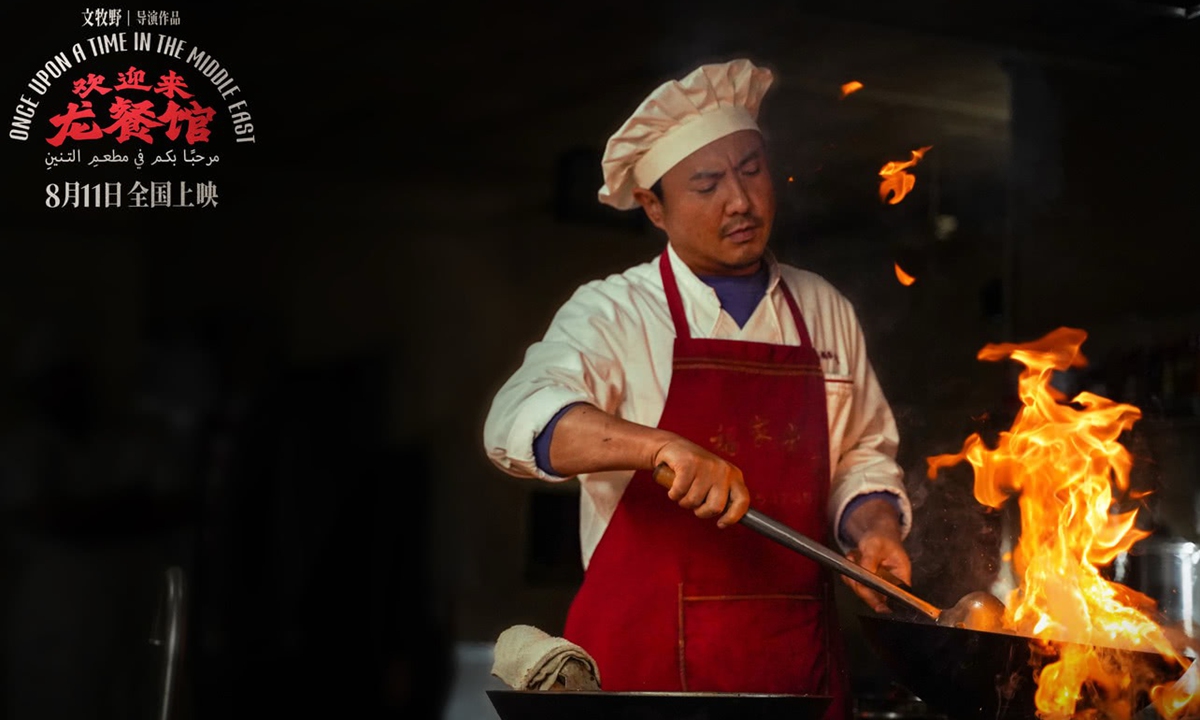
It centers on an ordinary Chinese chef caught in the crossfire of war. Shen Teng stars as Xu Fu, a cook who travels to the fictional Middle Eastern capital of Bahata to repay family debts. There he joins forces with restaurant manager Ma Junsheng (actor Jiang Qiming) to run a Chinese eatery. When conflict erupts, the self-preserving every-man endures personal losses and gradually comes to protect local children.
Produced by Ning Hao, the film continues Wen's signature focus on "little people," this time placing them far beyond China's borders.
In an interview with the Global Times, Wen talked about the project's connection to news reports of Chinese migrants who open restaurants overseas and forge quiet connections through food.
"Many Chinese people go abroad simply to make a living," he told the Global Times. "They open restaurants, use food to break down regional barriers, and form deep bonds with locals."
The production team conducted extensive research and location scouting in the Middle East to capture everyday details. Elements such as free-running single-humped camels required overseas shoots; the resulting images of open space after confinement, Wen noted, carry a simple sense of hope.
Food functions as the film's central motif.
"Food more often stands for happiness and peace," Wen explained. "Even in a war-torn environment, people still cannot do without three meals a day. That sounds basic, but after all the big things in life, what people care about most are the simplest things - eating a proper meal and taking care of family."
A specialized food unit developed the dishes, and Shen trained extensively so that most of the wok-tossing sequences were performed by the actor himself, Wen said.
The film deliberately intercuts kitchen routines with combat sequences.
"Three meals a day represent our longing for peaceful life, while war is the extreme act that destroys peaceful life on a large scale," Wen said. "When they collide, each becomes clearer: Food feels more ordered and full of happiness; war feels more chaotic and dark."
He hopes the juxtaposition helps audiences recognize how hard-won ordinary peace really is.
Xu Fu's decision to shelter orphans never relies on lofty rhetoric, only a meal and a roof. Wen described this approach as rooted in a human-centered outlook rather than classic Western hero narratives.
"We place more weight on humanism and the value of a person's existence. Our culture is about living well, studying well, eating well, and looking after children. No matter how large the events, three meals a day remain unavoidable. Food itself has warmth and can give people real strength when they are in a difficult situation," Wen said.
The director noted that he wants viewers to leave with the plainest conviction: live properly, eat properly, and cherish the peace that exists in the present.
On balancing personal expression with commercial reach, Wen kept his principle simple: "Make the film well and tell the story well. I try to put what I want to express into foreshadowing and details without hurting the viewing experience. If audiences notice those details, I will be glad. If they do not, it does not affect the normal narrative."
From Dying to Survive and Miracle: Stupid Kid to the new film, Wen's view of human complexity has remained consistent. "People have many different sides. They face different circumstances and make different choices."
The through-line, he added, is the same plain belief: "Being able to enjoy a proper meal is the greatest happiness."
Early audience response has been overwhelmingly positive. Advanced screenings delivered scores of 9.7-9.8 on major Chinese platforms including ticketing platform Maoyan.
Many entered expecting a light Shen Teng comedy and left in tears, describing the experience as "laughing then crying." Shen's restrained performance has drawn particular praise, with some calling it the strongest of his career. Jiang's supporting work has also been widely noted.
Moviegoers have frequently highlighted the film's refusal to deliver speeches. Its focus on daily meals and small acts of care lands more powerfully than any slogan.
On the depiction of the conflict, audiences observe that the movie offers a perspective that "flips the Hollywood script" by casting the US as the invader, while refusing to portray US soldiers as pure villains. Instead they appear as ordinary young men: loose in discipline and marked by the alienation of war.
Both Chinese and overseas viewers have singled out this measured approach as part of the film's distinctive Chinese viewpoint: It sidesteps both Western hero narratives and simple demonization. Some international comments note that by staying with ordinary lives rather than choosing geopolitical sides, the story offers a different lens on conflict.
One widely circulated comment from a popular Chinese self-media account on WeChat captured the film's ambition: "You can think of this film as a blend of Casablanca, Schindler's List, and The Shawshank Redemption, yet at its core lies the same grounded human compassion found in Dying to Survive. This is a highly successful attempt by Chinese filmmakers to surpass Hollywood. It is the first Chinese film that truly possesses a global vision and a professional sense of international storytelling. It is also a gift of warmth and goodwill from the Chinese people to a world still torn by war and cruelty."
。

B | 在相关计划获得有关方面批复后,中国足协、中足联筹备组于7月6日下午召开联赛工作会议暨中超俱乐部负责人会议,向各家俱乐部通报具体方案。据了解,受客观因素暂无法在属地承办主场比赛的俱乐部,可寻求备选主场,亦可赴赛事主办方提供的第三方赛地进行主场比赛,还可以放弃主场赴对手主场参赛。此外,考虑到部分俱乐部面临的实际运营困难,赛事主办方计划为参赛各队先行支付参加主客场比赛所需要的城际交通费用。

C | 启动“恢复主客场”筹备工作 据了解,作为赛事主办方的中国足协、中足联筹备组多日前就已启动“中超恢复主客场制”的各项筹备工作。而从目前各方反映的情况看,相关方案已经获得有关部门的批复。接下来,赛事主办方将携手俱乐部及各有关方面落实具体工作细节。在确认联赛恢复主客场制后,一些现实难题摆在了各方面前。其中,首要的问题就是,在赛制调整大方向确定后,各俱乐部在承办主场赛事的问题上能否获得属地政府部门的支持。据悉,中国足协已准备了一份有关联赛拟恢复主客场制的意见征集函,计划通过俱乐部提交给地方体育管理部门、运动协会,并最终提交给各地政府相关部门审批。城际交通费用由主办方先行支付 受疫情及场地条件等各类客观因素影响,不同俱乐部“备战”主场比赛的情况有所不同,面临的难题也各有不同。

D | 因此对于部分俱乐部可能暂时无法承办主场比赛,赛事主办方做了充分的应对预案。举例来说,如某一家俱乐部暂时或者短期内无法在俱乐部属地原主场承接主场比赛,那么可寻求备选主场。

E | 如仍无法落实主场,那么俱乐部可选择赴主办方提供的第3方场地参加主场比赛,如不愿前往,俱乐部可选择放弃当轮比赛主场权利,转赴对手主场参赛。参加主客场比赛产生的费用,无疑是当下部分深受财务危机困扰的俱乐部所头疼的问题。

F | 对此,某俱乐部代表向北青报记者透露,赛事主办方已经承诺帮助各俱乐部先行支付主客场比赛所需的城际交通费用。至于抵达赛区后的食宿及其他相关费用如何落实,则有待赛事主办方进一步沟通确认。3个赛区因赛制也需相应调整 因赛制面临调整,中超联赛的总体运营工作也将面临相当大的困难。原计划承接赛会制比赛的3个赛区也需要相应调整工作内容。

G | 由于梅州市、大连市分别拥有一支中超球队,因此两城市赛区接下来仍可按部就班落实各项赛事组织或接待工作。至于海口赛区,其对中超联赛甚至中国足球的支持力度也很大,该赛区及大连赛区大概率将成为中超联赛余下赛事可供俱乐部选用的“第三方赛地”。对于余下24轮赛事的赛程周期,目前赛事主办方倾向于在年内打满全季比赛。

H | 因国家队本年度内不再安排集训,因此中超余下赛程的安排将相对比较连贯。中超联赛将在12月内结束,这意味着其赛程将与卡塔尔世界杯赛程“撞车”。聚焦 为确保比赛顺利进行 极端情况有“熔断”机制 7月6日,中国足协、中足联筹备组通过线上、线下方式召集中超各俱乐部负责人参加联赛工作会议。会上中足联筹备组组长史强对赛制调整的背景做了一番介绍,同时表示,赛事主办方将根据各俱乐部主场赛区属地政府的意见,尽可能有序、适度向现场观众开放中超赛事。对于联赛恢复主客场制后可能出现意外,史强表示:“应该说恢复主客场,符合社会期待,符合俱乐部、球员及其他各方的整体利益。目前,对比赛最主要的影响还是疫情防控工作。我们针对疫情防控工作,研究制定了一份疫情防控工作指南,设计了各种应对预案。比如说,某球队所在城市一旦出现疫情怎么办?球队本身出现疫情怎么办?将前往的客场城市出现疫情怎么办?对此类情况,首先我们要严格执行国家防疫政策,要积极在当地防疫部门指导下,做好疫情防控工作,推出各种有针对性的预案措施。

I | 为确保比赛进行顺利,各俱乐部在紧急情况下可选择备用主场。

J | 甚至,我们还会准备中立赛场等措施。对于极端情况,我们还将推出熔断机制。也就是说,赛事主办方会在什么情况下停止比赛,把比赛赛制由主客场制调整回赛会制。” 关于球迷关注的能否入场观赛问题,史强解释说:“恢复主客场制,其中一个重要因素,便是观众回到比赛现场,比赛离不开球迷。在今年中超开幕式期间,我们曾做过一些尝试。对现场观众的有序开放,我们做了评估。对于开放观众后如何采取防疫措施,我们也在当地防疫部门指导下,取得了一些经验,这些也都是为后面比赛进一步开放观众做积累。” 延伸 7月20日前中超球队需确认能否主场作战 在7月6日下午中超联赛工作会议及俱乐部老总峰会结束后,中足联筹备组竞赛工作负责人、中超联赛组委会执行副主任郭炳颜表示,鉴于部分俱乐部受疫情等因素影响可能暂不具备主场作战的条件,赛事主办方也推出了各种主场预案,并要求各俱乐部在征得地方体育管理部门、当地人民政府同意后,最晚于7月20日回复中国足协,明确能否承办主场比赛。按照计划,由中足联筹备组选派的考察团队将从7月7日开始兵分多路,赴各俱乐部备选主场赛地进行实地考察。郭炳颜强调,“从7月7日开始,将选派两三个工作组,去各个赛区主场、酒店检查。

K | ” 对于部分无法向中国足协出具其属地政府同意函的俱乐部,赛事主办方也将推出应对预案。郭炳颜透露,“我们允许俱乐部异地选择主场。但如果这样的主场参赛条件还不能满足,那么俱乐部可以去指定的赛区场地参加主场比赛或被安排到客场比赛。如果主、客两队同时无法在各自主场比赛,那么他们之间的比赛就必须在指定主场进行。” 本组文/本报记者 肖赧 统筹/王咏
Current article:http://lbygue4.banhuannunuluchuaiguangenru.sbs/news/20260826_9512.html
Published on:04:22:48
我的网站最近更新
- 日本ハム・新庄監督が苦言「あれがアウトにできないようじゃ、野球やってる間はレギュラーはちょっと難しい」
- 一颗无花果的“破圈”之路
- 原创 杨幂晒贵阳旅行照!完全卸下明星包袱的路透,把当地小吃带火了!
- 冲刺四季度丨全力打造“中国运动地板之都”
- 린지 그레이엄 여동생, 상원의원 후보 경선 승리…트럼프 영향력 확인
- 海南体彩深度探访见证团赴京参加“走进体彩”公信力主题活动
- “小芯片”胜过巨头“大芯片”,国产算力黑马祭出“并行计算”杀手锏
- 董明珠:格力将继续坚持分红。个人从未卖出股票。
- 急于求成:经济学家对印尼经济增长雄心提出质疑
- 又暖又燃 文艺轻骑兵一线“送大餐”
- 长春轨道交通 7 号线一期工程明日开通初期运营,年内将 4 线齐开、创历史之最
- 亚裔律师神操作:给客户立遗嘱,受益人写自己,客户全家“净身出户”……
- Sharman Joshi Reveals Father-in-law Prem Chopra Is Diagnosed With Severe Aortic Stenosis
- 抚顺市县处级主要领导干部学习贯彻党的二十届三中全会精神专题研讨班开班
- 罗马诺:热刺已与曼城签署+交换马尔穆什交易文件
- 布兰登·米勒:失利鞭策我前行 我们必须坚定信念
- Israel-Saudi Deal, Palestinians & Iran Agreement: What’s on Agenda of Biden's Mideast Trip?
- 【观点】申银万国:蛋白粕远月价格有支撑,美豆优良率下降及进口成本抬升
- 生成式官网为企业省下80%官网成本 汉土Hantu Gen-AI CMS 正在重新定义 ROI
- 沈阳发布暴雨红色预警
- 江苏无锡市中级人民法院原党组成员、审判委员会委员刘勇被查
- 县委第六轮巡察工作动员部署会议召开
- 兴城:“党建联盟”结对共建 激发党建新活力
- 划水!亚历山大今天仅得15分 他上次得分低于20还是去年10月
我的网站热门资讯
- 钟薛高招嘴替活动优惠券不到账?回应称正加紧操作后续会到账_消费者_南都
- Former Chinese premier Zhu Rongji passes away at 98
- Chinese teenagers flock to tech frontline to touch the future amid AI study-tour boom
- 华东重机:上半年净利润6206.97万元,同比增长137.31%
- 美团平台乱派单超时追责骑手不让截屏存证太霸王
- 9 Kareena Kapoor Khan Films That Define Her Career
- 沧州化工“三兄弟”成了“合伙人”
- 汽油价格下跌 英国8月CPI同比增长9.9% 从40年高位小幅回落_央行_通胀率
- “闽超”联赛与福马友谊赛本周末开踢 福州交通多措并举护航观赛路
- 只花数千美元 车迷用拆车件手搓出炫酷单座跑车:还能合法上路
- 热身赛:被轰23-1!中国男篮19分惨负乌拉圭吞首败 赵嘉义17分
- FIM MotoMini China 2026 selects final Chinese qualifiers
- ST华铭:公司本次计提资产减值准备金额合计2373.71万元
- 秀我中国|专访《欢迎来龙餐馆》“老扎”扮演者
- 购车综合优惠至高48000元 五菱星光推出限时购车活动
- 中企退出罗马尼亚光伏园公共采购投标,欧盟中国商会:欧委会滥用《外国补贴条例》调查
- First Poster for Kristoffer Borgli’s The Drama starring Robert Pattinson and Zendaya unveiled
- 全民健身日掀起运动热潮 “迈开步 动出彩”燃动北京坊
- Azerbaijan raises flag over the Karabakh capital to reaffirm control
- 王沪宁会见第三届中美1.5轨对话美方代表
- 山手線の「最閑散駅」が3月に本領発揮へ 昼間人口10万人の巨大な街が本格始動! 構想着手から約20年を経て完成
- Dispute between Iraqi military and Kurdish Peshmerga turns deadly, killing 3
- 多元业态升级!“电影+”延伸光影消费链条,多元业态升级!“电影+”延伸光影消费链条
- NYT "트럼프가 캐나다에 꺼내든 관세법 338조, 법적 리스크 커"