
一吻定情China reports 522,000 new COVID-19 cases, one death in July amid fluctuating upward trend_我的网站
一 | MacPad 要来了? 如果你想买一台新的MacBook Pro,或许可以再等等。  China reported 522,000 newly confirmed COVID-19 cases in July, including 487 severe cases and one related death with cases showing a fluctuating upward trend, China's national disease control authority said. The current uptick in infections represents another regular cyclical wave, with its severity comparable to surges seen in the past two years. The upward growth curve has slowed markedly, and the country is now on the plateau phase of this epidemic peak, said the Chinese Center for Disease Control and Prevention (Chinese CDC) on Thursday. All tested infection samples were confirmed to be the Omicron variant, with the NB.1.8.1 strain and its sublineages accounting for the majority of circulating cases, the Chinese CDC said. A Beijing-based respiratory disease specialist told the Global Times that waning population immunity, continued virus mutations that weaken existing antibody protection, and increased summer travel have contributed to the recent modest rise in infections. However, there is no evidence that the virus has become more pathogenic. Nationwide infections appear to be nearing their peak and case numbers may begin falling in late August. 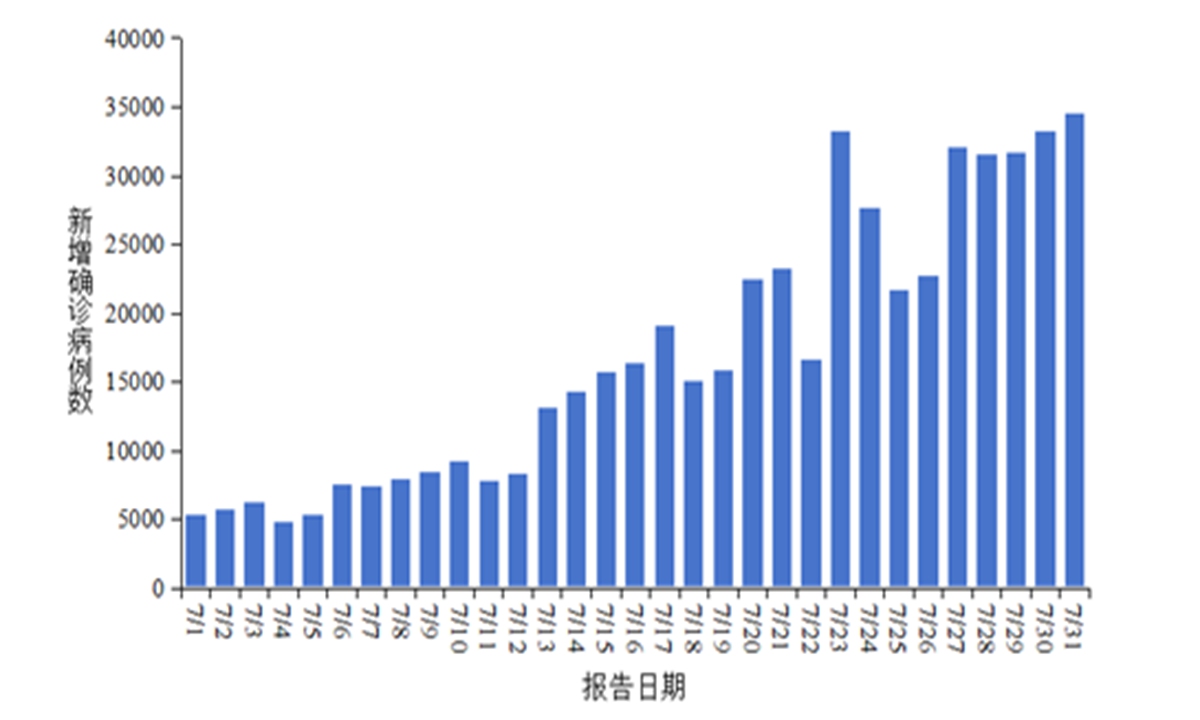 According to sentinel hospital surveillance data, from June 29-July 5 to July 27-August 2, the proportion of influenza-like illness among all outpatient and emergency visits at China's 1,041 COVID-19 and influenza sentinel hospitals edged up with slight fluctuations, standing at 4.3 percent, 4.4 percent, 4.5 percent, 4.4 percent and 4.5 percent, respectively. During the same period, the COVID-19 positivity rate among patients with influenza-like illness in outpatient and emergency departments rose for consecutive weeks. Several factors drove the fluctuating rise in COVID-19 cases in July. Population immunity has waned, as more than six months have passed since the last major wave of infections for most people, while continued SARS-CoV-2 mutations have reduced the protection provided by existing antibodies, Li Tongzeng, a respiratory disease medic from Beijing You An Hospital to the Capital Medical University, told the Global Times on Friday. These factors, combined with increased travel and population mobility during the summer vacation, contributed to the recent small-scale surge. Based on patterns observed in recent years, COVID-19 infections tend to rise every six to eight months as population immunity declines, said Li. The expert noted that while the virus continues to mutate, there is no evidence that it has become more pathogenic. Clinical data show that most patients develop only mild symptoms, with very few progressing to pneumonia or requiring hospitalization. The Chinese CDC noted on Thursday that since COVID-19 was reclassified as a Category B infectious disease under Category B management, it has evolved into a prevalent, recurring respiratory infectious disease in China, with one to two epidemic fluctuations occurring nationwide each year. Li also noted that residual immunity from previous infections also helps reduce disease severity, with most reinfections presenting as mild upper respiratory symptoms that resolve within about a week. The single COVID-related death reported nationwide in July further indicates that the current fatality rate remains very low. Judging from historical epidemic patterns and current case growth trajectories, national infection figures may begin to decline in late August. Nationwide case numbers are now nearly at their peak, with declines already observed in some regions, said Li. The Chinese CDC also said on Thursday that surveillance had not detected any variants posing major public health risks, nor had the current wave caused notable disruptions to the healthcare system. The public is advised to take appropriate protective measures, including wearing masks when necessary, maintaining good personal hygiene, adopting healthy lifestyles and getting vaccinated as recommended. 。 比起刚刚发售、除了芯片几乎没有变化的M5 MacBook Pro,苹果真正在酝酿的大招,可能还在明年…… 这将是Mac产品线,甚至可以说是整个苹果电脑历史迄今,最重大的设计和功能调整,不仅违背了乔布斯的「祖训」,也打了库克的脸。 一言蔽之:明年的MacBook Pro,将配备一块触控屏。 全新设计的MacBook Pro 自M1 Pro开始,MacBook Pro的当前模具已经沿用五代,总体看下来赞赏多过批评。
二 | 更圆润的机身和多样的接口,更强调实用主义和工具属性。再加上M系列芯片强大的性能和卓越的能效,让最近几年的MacBook Pro收到的好评远多于英特尔架构时代的前辈。 根据彭博社爆料,新款的MacBook Pro将会采用全新的设计,一个显著特征是,机身会比现在更轻薄。 多年以来,苹果一直想打造「又轻薄又强大」的MacBook Pro。
三 | 2016年的改款(当时去掉了MagSafe等一票接口并改换Type-C)就是为了这个目标而来。然而遗憾的是,之后的五年时间里,苹果被性能又差、发热又厉害的英特尔处理器拖了后腿。 好在,苹果在2021年用M系列芯片以及新机身/接口设计,对MacBook Pro的口碑及时进行修复。但产品的厚度和重量已然不是苹果理想中的样子。以16寸MacBook Pro为例,重量达到2.14千克,和市面上大多数性能笔记本已经相差无几。 如果能做得更便携,MacBook Pro无疑会比PC阵营再多出一个续航之外的优势。 事实上,在芯片制程足够先进的当下,把性能本做轻做薄已经不是苹果一家的追求,这两年已经看到一些Windows性能本在往「瘦身」的方向走,想要做出一些差异性。 把MacBook Pro做得更薄,除了对机身有更高的工程学要求,苹果也将对AB面开刀——如果你仔细观察,会发现不管是MacBook Pro还是MacBook Air,AB面都具有相当的厚度。 因此,新款MacBook Pro上的OLED屏幕不止能带来比LCD更深邃的显示效果,也能显著压缩它的厚度。 Mark Gurman透露,MacBook Pro的OLED屏幕将对标iPad Pro,意味MacBook Pro很有可能会同样采用双层OLED技术,亮度和能耗表现都会更出色。 而根据分析师郭明錤,MacBook Pro将采用on-cell触控屏幕,而不是全贴合的「in-cell」。 至于大家关心的屏幕切口问题,好消息是刘海没了——但坏消息是,换成了类似iPhone的「胶囊打孔」…… 由于macOS 26已经能同步iPhone上的实时活动卡片,打孔屏的新MacBook Pro看来也能用上「灵动岛」了。 新设计当然值得期待,但更重磅的,自然还是「触控Mac」。 彭博社称,苹果内部已经在开发加强型铰链和屏幕硬件,让用户在笔记本电脑屏幕上触控操作时不会出现异常的反弹或移动——这也是触控屏电脑/2-in-1电脑的常见痛点。 由于总体的零部件价格更高,新款MacBook Pro的售价会比目前高出几百美元。
四 | 和往常一样,MacBook Pro的新设计也将会在晚些时候下放到MacBook Air上,目前预计首款采用OLED屏幕的MacBook Air在2028年推出。 MacBook Pro,还是iPad Pro? 长久以来,苹果内部对「触控电脑」这个概念并不积极。 乔布斯认为,用手指点触垂直的笔记本屏幕的交互不符合人体工学;而不久后或将离任CEO的蒂姆·库克也公开表示过,将平板和笔记本电脑结合起来的想法,就像「把烤面包机和冰箱融为一体」。 ▲2017年库克来参加中国发展论坛时,被提供了一台「烤面包机+冰箱」 还有一个不容忽视的问题:MacBook产品的屏幕是出了名的高素质,也是出了名的不耐刮,直接上下其手很容易对涂层造成破坏。即使是现在的MacBook,屏幕磨蚀也是通病了。 不过,整个笔记本市场,和MacBook定位相似的其他产品,几乎都配备了触摸屏,消费者对MacBook增加触控支持的呼声,也越来越大了。 虽然对于典型电脑用户来说,触控交互远不如键鼠方便。但考虑到那些自出生起就和智能手机、平板打交道的年轻一代而言,一款强大的笔记本电脑,能够用手指触控交互,似乎也不是什么歪理邪说。
五 | 除了人体工学和交互这些更「产品哲学」的理由,彭博社的苹果专家Mark Gurman推测苹果迟迟不给MacBook触摸屏还有一个更商业的原因:担心会影响iPad的销量。 但给iPad增加触控板和键盘,也不能取代一台MacBook——正如这个逻辑,拥有触控屏的MacBook,应该也只是锦上添花。
六 | 用户90%的时间还是会继续用屏幕下方的键盘和触控板,和iPad无法构成竞争关系。 根据郭明錤的爆料,苹果内部给MacBook增加触摸屏的理由,是「在一些场景对用户更有用」,例如精准放大、旋转一些图片的素材,调整视频的进度条,也为支持Apple Pencil提供了可能。 可以预见的是,苹果不会只单纯地把一块触控屏幕塞进MacBook,未来的macOS也会做出相应的改变,将整个系统的交互能够配合指尖交互。 这就不得不提到Touch Bar,虽然它不算成功,但也说明苹果其实早就对Mac创新触控交互有所想法。 而iPadOS 26的「Mac化」,反过来也可以说是在为未来的触控Mac探索进行交互和功能。Mac也早已能运行iPad应用,两者之间的差异正在逐渐减少。
七 | 实际上,比起扶不起的iPad,这几年的Mac可谓是乘上M芯片的风实现起飞:根据统计机构IDC,Mac在今年第二季度出货620万台,较同期大涨21.4%,远超PC厂商。StatCounter统计,Mac的全球份额也已经上升到15%。 虽然IDC数据显示,iPad上季度出货量是Mac的两倍,但是主力军还是搭载A芯片的入门级iPad。苹果这几年下力气推的iPad Pro,Mark Gurman表示销量不算亮眼。 M芯片已经是苹果Mac产品体验的独特优势,但也带来了巨大的花销。每一代M芯片都耗费数亿美元研发成本,但只能领先短短一两年。芯片的制造成本更不容忽视,一块M1芯片成本约50美元,每提升一级翻一倍,而M1 Ultra更是高达500美元。 为了摊薄成本,苹果把这些M芯片引入到更多产品线:Mac、iPad,甚至Vision Pro。这三者中,只有Mac出货量还在快速扩张,为其开发新设计新功能的回报率更高。
八 | 更深层的原因是,用户交互和使用场景变迁,坚守Mac和iPad的泾渭分明,可能意义已经不大了。 爆料中M6 MacBook Pro的更轻薄机身,也暗示了两者合流的可能性。它不会像十年前那样,为轻薄而轻薄,性能和可靠性成为牺牲品,而是根据M6芯片的能力量体裁衣,做到轻薄和性能的平衡。 其释放出来的便携性,会创造单纯堆性能无法带来的新价值,这其实也是苹果一直以来对iPad Pro的期待。 未来两者的界面与应用,甚至形态上也会越发相似,就像生物学上的「趋同进化」——两者本来是不一样的物种,最终朝同一个方向改变。 比如,一些本来不是蟹的甲壳类动物,由于长期生存在特定环境里,变得越来越像螃蟹,这种趋同进化的现象名为「蟹化」,螃蟹也因此被戏称为「生物进化的终点」。 就像是平板电脑刚诞生的时候,本来是「大号手机」(phablet),现在各家都在把它做成「笔记本电脑」,再加上触控屏,键盘可以360度翻转。 「PC平板二合一」产品似乎成为了一种各家都在追求的「螃蟹」,即使大部分用户还是继续把平板当大号手机,笔记本也主要在用键鼠交互。 iPad和MacBook的交点或许会比我们想象中更早到来。著名苹果供应链分析师Ross Young透露,苹果正在打造的折叠设备不止有iPhone Fold,还有一款18寸大屏折叠设备。 不过彭博社最新的消息显示,苹果目前在这台设备的开发工作上碰壁,面临重量、功能和显示技术等工程挑战,发布日期预计推迟到2029年或更晚。 和发布日期一样谜团重重的,还有这款产品的定位:它究竟是会是一台iPad,还是一台Mac呢? 或许两者都是,因为这两者在未来最大的区别,可能只有搭载的系统名字不同。 Current article:http://lbygue4.banhuannunuluchuaiguangenru.sbs/ssj8lls/20260826/60547.html Published on:00:36:03 |


